
Media Relations: Definition, How to Build It, and Examples
What media relations is, how it differs from publicity, its activities, six steps to build relationships with the media, examples, and how to measure success.
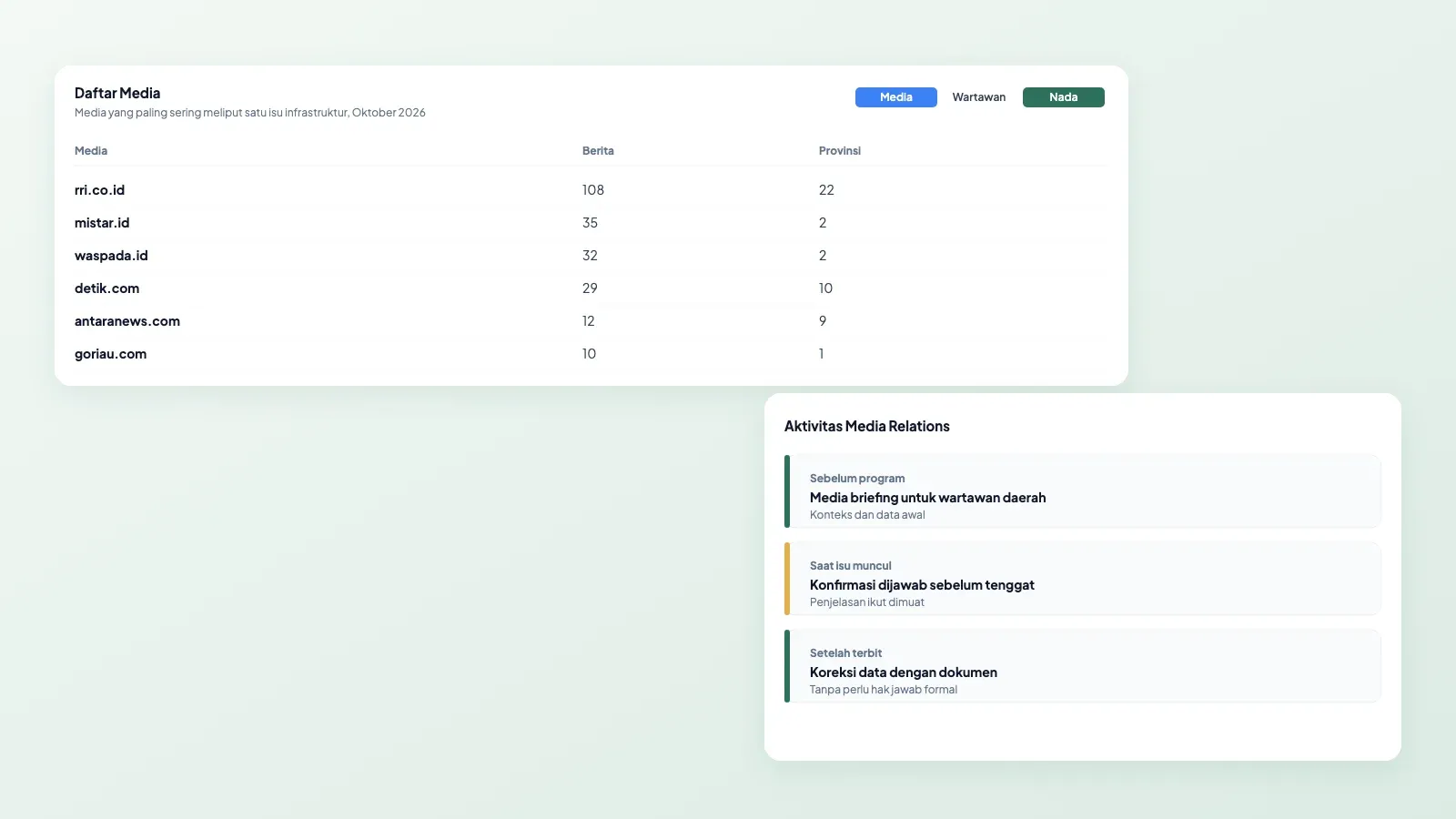
Media relations is the work of building a trusted working relationship between an organization and the media, so the organization's information is reported accurately and the organization becomes a source journalists turn to. Media relations is more than sending press releases. Its core is trust: journalists know whom to ask, and the organization knows which outlets cover its issues.
This article covers what media relations is, how it differs from publicity, its main activities, how to build it step by step, examples, and how to measure it. The examples apply to government institutions, state-owned enterprises, and companies.
What media relations means
Media relations is the part of public relations that manages an organization's relationship with journalists, editors, and media owners. It has two goals. First, the organization's information is published correctly and on time. Second, when an issue involves the organization, journalists ask for its side before they write.
The relationship runs both ways. Organizations need the media to reach the public, and the media need organizations as accurate sources. A good relationship does not mean the media always write positively. The media stay independent. What an organization can work toward is coverage that is accurate, balanced, and includes its explanation.
Media relations vs publicity
|
Aspect |
Publicity |
Media relations |
|---|---|---|
|
Focus |
Getting one message or event covered |
Long-term relationships with journalists and newsrooms |
|
Timing |
Short term, follows the agenda |
Ongoing, including when there is no agenda |
|
Measure of success |
Number of outlets that carried it |
Accuracy of coverage, requests for comment, response speed |
|
In a crisis |
Of little help |
Decides whether the organization's explanation gets included |
Publicity is still needed. But publicity without media relations usually stops at the number of pickups, with no assurance that journalists will ask first when something goes wrong.
Media relations activities
- Press releases and press conferences: sharing official information openly with many outlets at once. See the press release guide.
- Interviews and doorstops: providing spokespeople who are ready to answer, including on the sidelines of events.
- Media briefings: background explanations for journalists before a policy or program is announced.
- Media visits: leaders or PR staff visit newsrooms to introduce programs and hear feedback.
- Media trips: taking journalists to see a program or project in person.
- Right of reply and right of correction: correcting inaccurate coverage through the mechanism set by Indonesia's Press Law. See right of reply and correction.
How to build media relations
1. Map the outlets that actually cover your issues
Build your media list from coverage data, not from last year's invitation list. Regional issues are usually spread across many small outlets. In Qola's monitoring of one infrastructure issue in October 2026, articles came from 1,013 outlets, and more than half of them published only one article. National outlets matter, but regional outlets are often the first and most frequent to write.
2. Know the journalists, not just the outlets
Record the journalists who cover your issues: their beat, their deadlines, and how they prefer to be contacted. Regional journalists often cover many topics, so concise, ready-to-use information helps a lot.
3. Provide information that is easy to use
Data, photos, and reachable sources are a journalist's raw material. Press releases with clear numbers, schedules, and quotes are easier to publish. A tidy public information section on your website also reduces repeated questions.
4. Appoint a spokesperson and set a response time
Journalists need answers before their deadline. Decide who is authorized to answer and the maximum time to respond to a request for comment. "We'll get back to you" without ever getting back is the fastest way to damage a relationship.
5. Show up when there is no agenda too
A relationship that is only active when the organization wants publicity feels transactional. Regular briefings, issue discussions, or simply sharing data when journalists write on related topics build long-term trust.
6. Monitor coverage and follow up
Monitor coverage of the organization every day. Thank outlets for accurate coverage, correct mistakes politely with data, and note outlets that often write critically. Critical outlets are the ones that most need to be contacted and given data.
Media relations examples
Example 1, before a major program: a government office invites regional journalists to a briefing a week before a service improvement program launches. Journalists get background, baseline data, and the schedule. When the program launches, most articles already carry the right context.
Example 2, a viral complaint: residents' complaints about a public service circulate and start to appear in the news. Because the relationship exists, journalists call the PR team for comment, and the office's explanation, including data and actions taken, appears in the same article instead of a follow-up two days later.
Example 3, a data error: an article reports a wrong budget figure. The PR team sends a correction with supporting documents to the newsroom. Thanks to the existing relationship, the correction is published quickly without a formal right of reply.
How to measure media relations
- Accuracy: the share of articles about the organization with correct facts and data.
- Comment: how many critical articles include the organization's explanation.
- Response speed: average time from a request for comment to an answer.
- Right reach: whether target outlets carry the organization's information. See how to measure press release reach.
- Tone: how the share of positive, neutral, and negative coverage changes over time.
Common mistakes in media relations
- Contacting the media only when you want publicity.
- Avoiding critical journalists, who are the ones that most need data.
- Answering "no comment" without saying when information will be available.
- Treating all outlets the same, although regional and national media have different needs.
- Not monitoring coverage, so mistakes are only noticed after they spread.
The role of media monitoring in media relations
Media monitoring gives media relations a data foundation: which outlets cover your issues, which journalists write most often, what the tone is, and when an issue starts to grow. Qola monitors national and regional online news, labels sentiment in the context of Bahasa Indonesia, and flags spikes early, so PR teams can reach out before an issue spreads. See solutions for government PR or contact us.
FAQ: media relations
What is media relations?
Media relations is the work of building a trusted relationship between an organization and the media, so its information is reported accurately and it becomes a source journalists contact.
What is the difference between media relations and publicity?
Publicity focuses on getting one message or event covered. Media relations focuses on long-term relationships with journalists and newsrooms, including when there is no agenda and during a crisis.
What are examples of media relations activities?
Press releases, press conferences, interviews, media briefings, newsroom visits, media trips, and the right of reply and correction.
How do you measure media relations?
Measure coverage accuracy, how many critical articles include the organization's explanation, response speed to requests for comment, reach to target outlets, and changes in tone.
Can media relations make the media always write positively?
No, and it should not. The media stay independent. Good media relations makes coverage more accurate and balanced because the organization's explanation is included.